
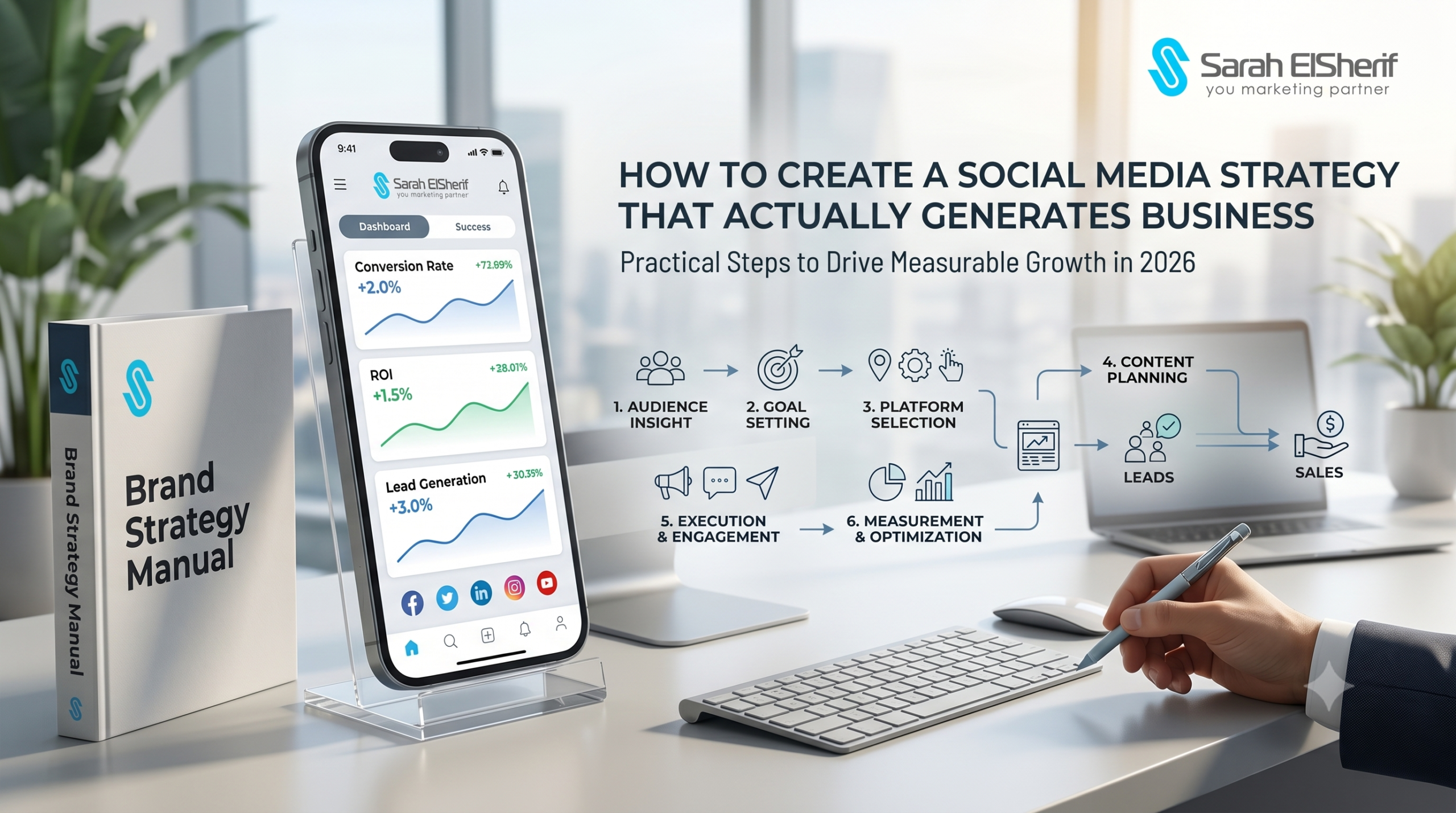
How to Create a Social Media Strategy That Actually Generates Business
Most businesses are active on social media. Very few are using it strategically. There is a significant difference between posting content regularly and running a social media strategy that consistently generates leads, builds relationships, and contributes to business growth.
After years of managing social media strategies for businesses across multiple industries, I’ve identified the key elements that separate accounts that grow and convert from those that just exist.
Start With a Clear Business Objective
Every social media strategy must begin with a specific, measurable business goal. Not “grow our following” or “increase engagement” — these are vanity metrics. Real business objectives sound like:
- Generate 50 qualified consultation requests per month
- Build an email list of 2,000 potential clients within 6 months
- Establish thought leadership to support a premium pricing strategy
Your business objective determines every decision that follows: which platform to prioritize, what content to create, and how to measure success.
Choose the Right Platform — Not All of Them
One of the biggest mistakes businesses make is trying to maintain an active presence on every social media platform simultaneously. This leads to mediocre content everywhere instead of excellent content somewhere.
Choose one or two platforms based on where your ideal customers are most active and where your content format fits best:
- LinkedIn — B2B services, professional consulting, corporate clients
- Instagram — Visual products, lifestyle brands, consumer services
- Facebook — Local businesses, community-based services, older demographics
- TikTok/YouTube — Educational content, broad awareness, younger audiences
Master one platform completely before expanding to others.
Build a Content Pillar System
Rather than deciding what to post every day, build a content pillar system — three to five core content categories that you rotate through consistently. For a business consulting brand, this might look like:
- Education — Tips, frameworks, and insights that help your audience solve problems
- Proof — Case studies, results, client testimonials, and behind-the-scenes content
- Personality — Your story, your values, your perspective, your opinions
- Promotion — Your services, offers, and calls to action (no more than 20% of content)
This system eliminates creative block and ensures your content serves multiple strategic purposes.
Create Content That Stops the Scroll
Attention is the most scarce resource on social media. You have approximately one second to stop someone from scrolling past your content. The first line of your caption, the first frame of your video, and the headline of your image must be compelling enough to earn that attention.
Proven hooks that stop the scroll:
- A bold, counterintuitive statement (“Everything you know about marketing is wrong”)
- A specific, relatable problem (“If your ads are getting clicks but no sales, read this”)
- A direct promise of value (“3 things I wish I knew before starting my business”)
Engage Like a Human, Not a Brand
The businesses that grow fastest on social media are the ones that show up as humans, not corporations. Reply to every comment. Ask genuine questions. Share opinions. Acknowledge mistakes. Celebrate your audience’s wins.
The algorithm rewards engagement — but more importantly, people buy from people they like and trust. Every authentic interaction builds the relationship that eventually converts to business.
Measure What Matters
Track metrics that connect to your business objective, not just vanity metrics like follower count and likes. If your goal is lead generation, track:
- Link clicks to your website or landing page
- Direct message inquiries
- Email sign-ups attributed to social media
- Consultation requests mentioning social media
Review your metrics monthly, identify what’s working, double down on it, and eliminate what isn’t.
The Compound Effect of Consistency
Social media success is not built in a day, a week, or even a month. It’s built through the compound effect of consistent, valuable content delivered to a specific audience over an extended period.
The accounts with 50,000 engaged followers didn’t get there by going viral once. They got there by showing up every single week for years. Commit to your strategy for a minimum of 90 days before evaluating its effectiveness — and measure the right things when you do.




No comment